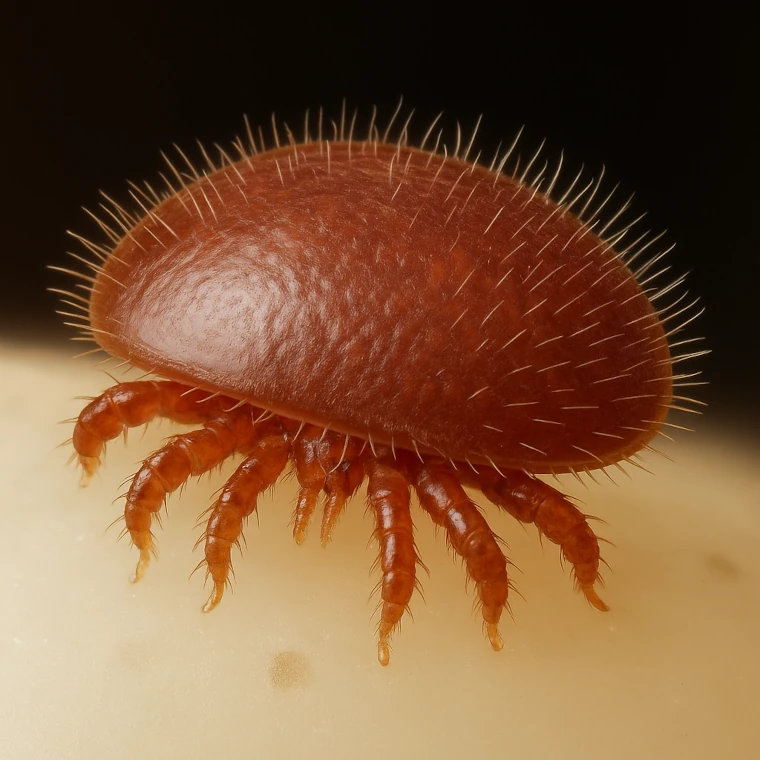
Varroa Control Strategies for South African Beekeepers
Varroa mites (Varroa destructor) are among the most serious threats to honeybee colonies worldwide. In South Africa, these parasites are a constant challenge for beekeepers, particularly during the seasonal shifts when colonies are vulnerable. Understanding how varroa mites affect bees, how to identify infestations, and what management strategies are available is essential for sustainable beekeeping.
What Are Varroa Mites?
Varroa mites are external parasites that feed on honeybees.
They attach themselves to adult bees and developing brood, consuming hemolymph (bee blood) and fat body tissue. This weakens the bees directly and also spreads harmful viruses such as Deformed Wing Virus (DWV).
In South Africa, varroa mites are established in both managed hives and feral colonies. Their presence has changed the way beekeeping is practiced, forcing farmers to monitor and intervene more actively.
Life Cycle of Varroa Mites
- Reproduction in Brood Cells
- A female mite enters a brood cell just before it is capped.
- She lays eggs inside the cell; the first develops into a male, and the rest into females.
- The young mites feed on the developing bee larva.
- Emergence and Spread
- When the bee emerges, mature female mites exit the cell and attach to adult bees.
- They ride on adult bees until they find another brood cell to infest, repeating the cycle.
This cycle means varroa populations can grow quickly, particularly in strong colonies with a lot of capped brood.
Why Varroa Mites Are Dangerous
- Weakened Bees – Bees with mites are less able to forage, produce wax, or rear brood.
- Disease Transmission – Mites spread viruses, the most common being Deformed Wing Virus (DWV).
- Reduced Winter Survival – Colonies weakened by mites in summer and autumn are far less likely to survive the South African winter.
- Impact on Honey Production – Infested colonies produce less honey because more energy is spent on fighting off parasites.
Signs of Varroa Infestation
Beekeepers should regularly inspect for varroa. Common signs include:
- Bees with deformed or missing wings.
- Spotting reddish-brown mites on adult bees or drone brood.
- Reduced brood pattern and weaker colonies.
- Sudden colony decline, especially in autumn and early winter.
Monitoring Varroa in South African Hives
Regular monitoring is critical. Some common methods are:
- Drone Brood Uncapping – Pull drone brood frames and look for mites on larvae.
- Alcohol or Sugar Shake – Collect a sample of bees and check how many mites are present.
- Sticky Boards – Place sticky traps under mesh floors to count mite drop.
For South Africa, drone brood inspection is practical and widely used because it doesn’t require extra equipment.
Control and Management of Varroa
South African beekeepers have several approaches to manage varroa infestations:
1. Biotechnical Methods
- Drone Brood Removal – Since mites prefer drone brood, cutting out capped drone comb can reduce mite numbers.
- Screened Bottom Boards – Allow mites to fall through the floor where they cannot reattach to bees.
- Brood Interruption – Creating a temporary brood break reduces mite reproduction.
2. Chemical Treatments
- Organic Acids – Oxalic and formic acid treatments can be effective if applied correctly.
- Essential Oils – Thymol-based treatments are an option but require care in hot South African climates.
- Synthetic Acaricides – Products such as fluvalinate are sometimes used but mites can develop resistance.
Note: Chemical use should always be managed carefully to avoid contaminating honey and wax.
3. Colony Management
- Keep strong colonies with good nutrition.
- Avoid excessive feeding that stimulates unnecessary brood production in winter.
- Requeen with resistant stock where possible.
Seasonal Varroa Management in South Africa
- Late Summer (Feb–March): Begin reducing mite loads as colonies prepare for winter.
- Autumn (April–May): Ensure colonies are healthy, reduce mite levels, and confirm food stores.
- Winter (June–July): Monitor colonies closely; mite loads are naturally lower due to reduced brood, but weak colonies will not survive if heavily infested.
- Spring (Sept–Oct): Be alert for mite population spikes as brood production resumes.
Long-Term Solutions
While chemical and mechanical treatments help, long-term success lies in selective breeding. South African research has shown that some local bee populations display hygienic behaviour, removing infested brood before mites can reproduce. Encouraging these traits through queen selection may be the most sustainable path forward.
For South African beekeepers, staying vigilant against varroa is not optional – it is the difference between thriving hives and collapsing colonies.Varroa destructor mites are a persistent threat to honeybees in South Africa. They weaken colonies by feeding on bees and transmitting viruses. Controlling mites requires a mix of monitoring, treatments, and breeding for resistance.
Monitoring Methods
- Alcohol wash – accurate but destructive.
- Sugar shake – less harmful, good for field checks.
- Sticky boards – non-invasive, slower results.
Treat when infestation reaches 3–5%.
Control Methods
1. Chemical:
- Thymol products (warm weather).
- Oxalic or formic acid (brood-light periods).
- Synthetic acaricides (limited due to resistance).
2. Biotechnical:
- Drone brood removal.
- Creating brood breaks.
- Screened bottom boards.
3. Genetic resistance:
- Select colonies with hygienic or grooming behaviour.
Timing in South Africa
- Winter (June): Best for oxalic acid treatments during brood breaks.
- Spring (Aug–Sep): Recheck mite levels.
- Summer: Focus on drone brood removal and ongoing checks.
Links to Winter Prep
Mite management is a critical part of winter beekeeping in South Africa. Strong colonies also need proper nutrition. See how to feed bees sugar and how to feed bees during a drought.
Download a free Varroa Control checklist.
Conclusion
Varroa mites are a permanent challenge in South African beekeeping. They weaken colonies, spread disease, and reduce honey yields. Through careful monitoring, seasonal management, and integrated pest control methods, beekeepers can reduce their impact. The future of managing varroa may depend less on chemicals and more on breeding resilient local bees.
Varroa mites cannot be eradicated, but with integrated pest management (IPM), South African beekeepers can reduce colony losses and keep their bees healthy. All farmers should be vigilant and should practise varroa control.
FAQ: Varroa Mites in South African Beekeeping
What is “brood” in beekeeping?
Brood refers to the developing young bees inside the hive. It includes eggs, larvae, and pupae found in the wax cells. Worker bees cap these cells with wax once larvae are ready to pupate. Varroa mites reproduce mainly inside capped brood cells, especially drone brood.
What does “drone brood” mean?
Drones are male bees. Their brood cells are slightly larger than worker cells, and varroa mites prefer them because the longer development period gives mites more time to reproduce.
What is a “sugar shake”?
A sugar shake (or sugar roll) is a non-lethal test to measure mite infestation. Beekeepers place a sample of bees in a container with powdered sugar, shake it, and collect the mites that fall off. The bees survive and can be returned to the hive.
What is an “alcohol wash”?
Similar to the sugar shake, but bees are placed in alcohol instead of sugar. This method kills the sample bees but gives a very accurate measure of mite infestation.
What is “mite drop”?
Mite drop refers to the number of varroa mites that naturally fall off bees. Beekeepers can measure this by placing sticky boards under a screened bottom board. A high mite drop usually means a high infestation.
What is “brood interruption”?
Brood interruption (or brood break) is a management method where the queen is temporarily caged or removed to stop her from laying eggs. Without new brood, varroa mites cannot reproduce, and their numbers decline.
What is “oxalic acid treatment”?
Oxalic acid is a natural organic acid used to kill varroa mites on adult bees. It is most effective when colonies are broodless, usually in winter. It does not leave harmful residues in honey if applied correctly.
What is “hygienic behaviour” in bees?
Hygienic behaviour is when worker bees detect and remove sick or infested brood from the hive. Colonies with strong hygienic behaviour are better at resisting varroa infestations because they interrupt the mite’s reproductive cycle.
Why are varroa mites worse in winter?
In South Africa, colonies go into winter with fewer brood cells. If mite levels are high before winter, the few young bees that are produced may be heavily infested, weakening the colony and reducing its chances of survival.
Can South African bees survive varroa without treatment?
Some feral colonies survive with mites, but managed hives usually collapse if left untreated. Beekeepers should monitor and manage mites consistently to prevent heavy losses.