

How Honeybee Colonies Coordinate Behaviour
Honeybee colonies operate as highly organised units. Each bee contributes to the survival of the colony through structured roles and sophisticated communication. This coordination underpins every collective activity, including defence, foraging, brood care and environmental adaptation.
Understanding how colonies work together helps explain why bees sometimes sting — not as individuals acting alone, but as part of a defensive network that protects the hive.
Colony Structure and Roles
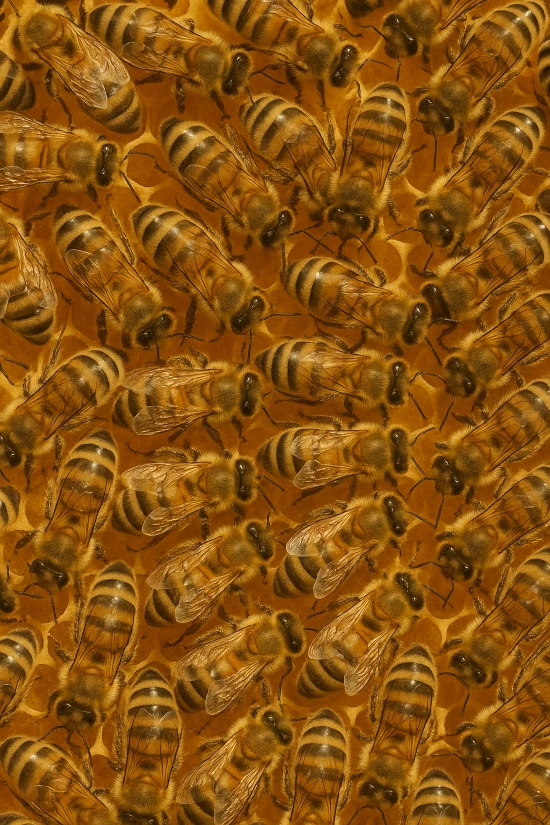
A honeybee colony is made up of three castes: a single queen, thousands of female workers, and several hundred male drones during certain seasons.
In South Africa, the dominant species is Apis mellifera scutellata (African honeybee), known for its strong defensive behaviour and high responsiveness to colony disturbances.
- Queen: The queen’s primary role is reproduction. She lays up to 1,500 eggs per day during peak season. Her pheromones provide colony cohesion by signalling her presence and reproductive dominance.
- Workers: Worker bees are sterile females that perform all tasks required to maintain the colony. Their duties change with age:
- Days 1–3: Clean brood cells.
- Days 3–10: Feed larvae and care for the queen.
- Days 10–16: Build comb, store nectar and pollen, regulate temperature.
- Days 16–21: Guard the hive entrance.
- After 21 days: Forage for nectar, pollen, propolis and water.
- Drones: Males exist mainly to mate with virgin queens. They do not forage, defend the hive, or contribute to brood care. Drones are expelled from the hive at the end of the season when resources become scarce.
This role distribution allows thousands of bees to function as a single coordinated entity without central control.
Chemical Communication: Pheromones
Pheromones are the primary communication channel in honeybee colonies. These chemical signals regulate behaviour across thousands of individuals simultaneously.
Queen Pheromones
The queen produces a blend of mandibular pheromones that:
- Inhibit the development of ovaries in workers (maintaining her reproductive monopoly).
- Signal her presence, ensuring workers remain loyal and coordinated.
- Influence swarm behaviour when colonies reproduce.
Brood Pheromones
Developing larvae emit brood pheromones that:
- Stimulate workers to forage for pollen.
- Regulate nurse bee behaviour to ensure continuous feeding and capping of brood cells.
- Help maintain brood nest temperature at 34–35 °C, essential for proper larval development.
Alarm Pheromones
When guard bees detect a threat, they release isopentyl acetate from their sting apparatus. This substance acts as an alarm pheromone, rapidly recruiting nearby workers to attack or repel intruders.
African honeybees (A. m. scutellata) respond more strongly and faster to alarm pheromones than European strains, which contributes to their reputation for intense defensive behaviour.
The Waggle Dance and Foraging Coordination
Honeybees use the waggle dance to communicate the direction, distance and quality of food sources.
This behaviour was first described scientifically by Karl von Frisch and remains one of the best-known examples of animal communication.
- Direction: The angle of the waggle run relative to vertical corresponds to the direction of the food source relative to the sun.
- Distance: The duration of the waggle run encodes distance. Longer runs indicate further distances.
- Quality: The intensity and duration of the dance indicate the richness of the source.
Foragers returning to the hive perform the waggle dance on the comb surface, allowing others to decode the message and leave in coordinated waves. This method allows colonies to exploit floral resources efficiently over several kilometres without direct leadership.
In South Africa, honeybee foraging patterns are strongly influenced by seasonal rainfall and flowering cycles of indigenous plants such as aloes, fynbos species, and eucalyptus. Colonies may shift foraging strategies rapidly when these bloom cycles change, relying on dance communication to redirect workforce allocation.
Coordination in Brood Care and Hive Maintenance
Hive activities such as brood rearing, comb building and temperature control are maintained through distributed coordination.
Brood Care
Nurse bees feed larvae a diet of royal jelly, pollen and nectar, adjusting feeding frequency based on larval pheromones. Larvae destined to become queens receive royal jelly exclusively throughout development. The coordination between nurses ensures continuous feeding across thousands of larvae.
Comb Building
Workers produce wax scales from abdominal glands and use their mandibles to shape hexagonal cells. These cells are constructed simultaneously by hundreds of bees, each responding to local cues and pheromones. The result is a uniform comb structure that maximises space and structural efficiency.
Temperature Regulation
Bees regulate brood nest temperature through fanning and clustering. When temperatures rise, workers fan their wings to increase airflow and evaporate water. When temperatures drop, they cluster tightly, vibrating their flight muscles to generate heat. No single bee controls this; instead, local temperature differences and pheromonal cues trigger coordinated responses.
Defensive Coordination
Colony defence is a critical form of collective behaviour. Bees defend their hive aggressively when they perceive threats to the queen, brood or stored honey.
Guard Bees
Older workers become guards, stationed at the entrance. They inspect incoming bees through antennal contact to detect colony odour. Intruders or bees from other colonies are repelled.
Alarm Chain Reaction
If a threat persists — such as a predator, human or animal near the hive — the first sting releases alarm pheromones. This triggers other workers nearby to sting the same location, creating a rapid, escalating response. Within seconds, dozens or hundreds of bees may participate.
Defensive Perimeter
African honeybees often establish a larger defensive perimeter than European strains, sometimes responding to disturbances tens of metres away from the hive. This behaviour has evolved in response to pressures from predators such as honey badgers (Mellivora capensis), birds and other hive-raiding animals.
The sting is not an isolated action. It is part of a coordinated defence system. Individual bees sacrifice themselves (since stinging mammals is fatal for workers) to protect the genetic future of the colony. Understanding this collective mechanism provides context for human–bee interactions and safety practices.
Environmental Response and Adaptive Behaviour
Honeybee colonies continuously adjust their behaviour to environmental conditions.
- Seasonal shifts: Colonies reduce brood rearing during winter or drought, reallocating worker labour to maintenance tasks. In South Africa, this adjustment follows rainfall patterns more than temperature, particularly in semi-arid regions.
- Swarming: When colonies become crowded or resources are abundant, the queen and a group of workers swarm to establish a new nest. This involves communication through queen pheromones, piping signals, and scout bees identifying potential new sites.
- Resource scarcity: Colonies can shift foraging ranges, increase robbing activity at weaker colonies, or consolidate brood nests to survive low nectar flows.
These adaptive behaviours rely on decentralised decision-making. Individual bees respond to local cues, and collective patterns emerge without a central leader.
Conclusion
Honeybee colonies achieve complex tasks through role differentiation, chemical communication, and behavioural coordination. Each bee operates based on simple rules and local information, but together they maintain colony stability, defend against threats, and adapt to changing conditions.
In South Africa, the African honeybee’s strong defensive response amplifies these behaviours, making understanding colony coordination important for beekeepers and the public alike.
For a deeper look at how these defensive strategies lead to stinging behaviour, read our article: Why Bees Sting.