
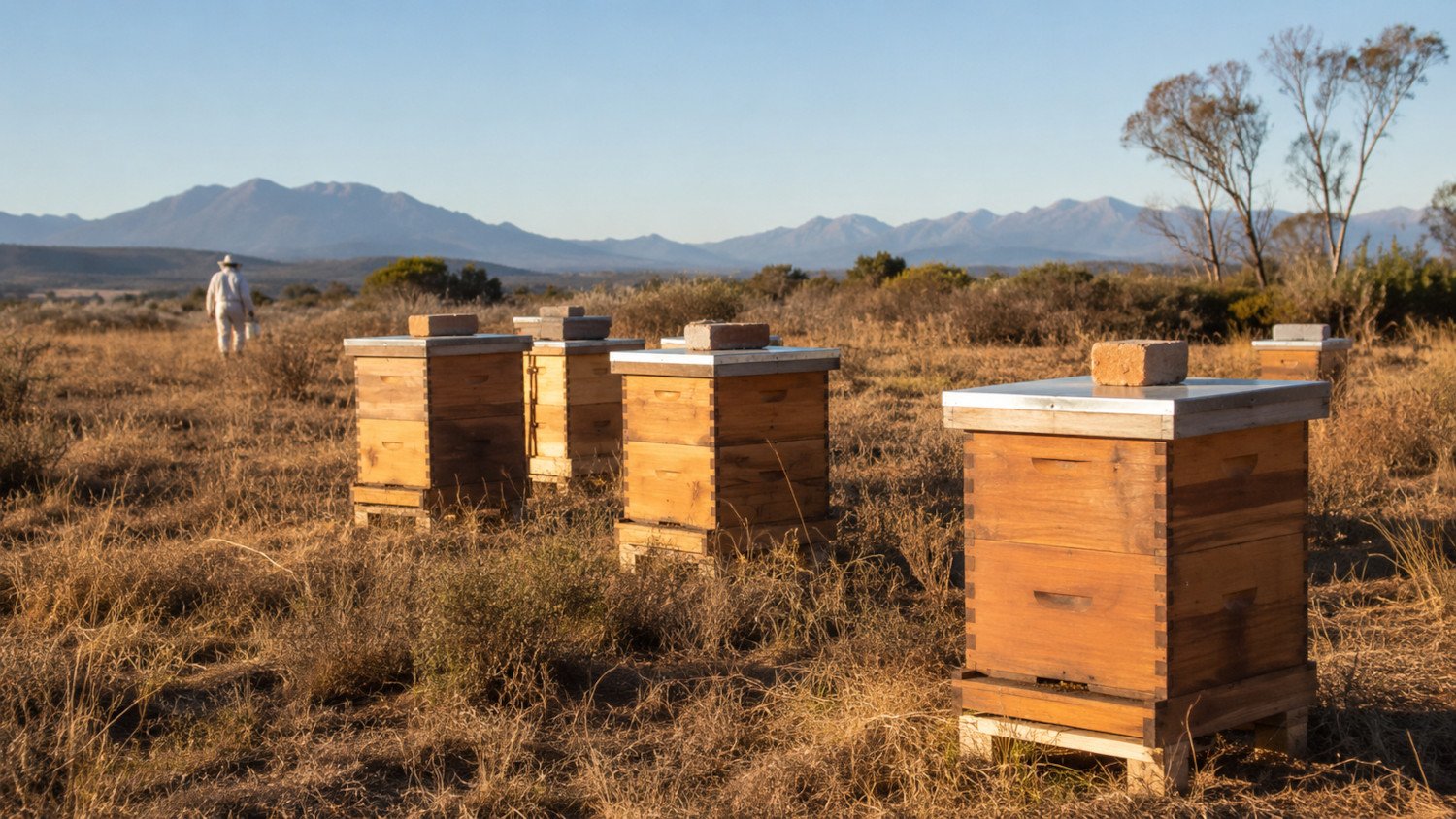
Winter Beekeeping in South Africa
Winter beekeeping in South Africa is less about protecting bees from snow and more about managing food, space, disease, moisture, and hive strength before spring. From April to July, colonies often slow down, forage becomes uneven, and weak hives can fall behind before the main spring build-up starts.
South African beekeepers work across different winter conditions. A hive in the Western Cape may face cold rain and damp weather, while a hive in Gauteng, Limpopo, Mpumalanga, or the Free State may face dry days, cold nights, frost, and long gaps between nectar sources.
This guide explains how bee farmers manage honey bee colonies from April to July, with practical steps for hive space, food reserves, feeding, Varroa control, disease monitoring, winter forage, and mid-winter inspections.
Why Winter Beekeeping Matters in South Africa
South African honey bees do not usually experience the long frozen winters seen in colder countries, but winter can still weaken colonies. The main risks are low food stores, reduced pollen, damp hives, queen problems, Varroa pressure, and poor hive positioning.
A colony that enters winter with enough bees, enough honey, and a healthy queen has a better chance of building quickly when spring forage starts. A colony that enters winter weak may survive, but it can miss the early spring flow and stay unproductive for months.
Winter work should begin before the coldest part of the season. For many South African beekeepers, April is the time to reduce unnecessary hive space, assess queen performance, and decide whether weak colonies should be combined.
Feeding should be done only when needed. Feeding is most useful when a colony is low on stores and natural forage is limited, which is a recognised reason for feeding bees in South Africa.
April: Preparing Colonies Before Winter
April is a transition month in many South African regions. Some areas may still have warm days and late forage, but the beekeeper should already be thinking about winter strength.
The first task is to reduce hive space. If bees are not covering all the frames, remove unused supers and empty combs so the colony has a smaller area to defend and keep warm.
Too much empty space can create problems. It can make temperature control harder, increase the chance of wax moth damage, and allow pests to occupy comb that bees are not guarding properly.
A good winter colony should have a laying queen, enough adult bees to cover the brood area, and enough stored food. The colony does not need to be huge, but it must be balanced.
Check whether the hive is queenright. Signs include fresh eggs, young larvae, a normal brood pattern, and calm behaviour during inspection.
A poor brood pattern can suggest queen failure, disease, poor mating, or stress. In April, there is still time to correct some problems before winter becomes too cold or forage becomes too limited.
Weak colonies should not always be carried through winter on their own. If a hive has too few bees, little brood, and poor stores, it may be better to combine it with a stronger colony.
Combining colonies is usually better than allowing two weak colonies to decline. A strong combined colony can defend itself, hold heat better, and build faster when spring arrives.
April is also a good time to check hive equipment. Replace broken lids, repair stands, close unnecessary gaps, and make sure rainwater cannot enter the hive.
May: Managing Food Stores
May is the month to focus strongly on food reserves. Even in warmer parts of South Africa, nectar can become unreliable, and colonies may consume stored honey faster than expected.
A practical method is to heft the hive. Lift the back of the hive slightly and compare the weight with known strong and light colonies in the apiary.
As a general working target, many beekeepers prefer colonies to have about 15–20 kg of usable stores going into winter. The exact amount depends on colony size, local forage, hive type, and regional conditions.
A large colony needs more food than a small colony. A colony in a dry inland area with little winter forage may need more help than one placed near reliable aloe, citrus, fynbos, or gum forage.
If a hive feels light, feed before the colony reaches a crisis point. Emergency feeding is useful, but planned feeding is better because it prevents brood interruption and starvation stress.
Heavy syrup is often used for winter stores because it contains less water than light syrup. A common winter ratio is two parts sugar to one part water by volume or weight, depending on the beekeeper’s method.
Feed inside the hive where possible. This reduces robbing, protects the feed from other insects, and helps the colony access the food during cold weather.
Avoid spilling syrup around the apiary. Spilled syrup can trigger robbing, especially when natural nectar is scarce.
Pollen should not be ignored. Honey and syrup provide carbohydrates, but brood rearing also needs protein from pollen.
If natural pollen is scarce, pollen patties or suitable pollen substitutes may help colonies maintain a small brood nest. They should be used carefully, because protein feeding can stimulate brood rearing that the colony may not be able to support if carbohydrate stores are low.
June: Varroa, Disease, and Brood Checks
June is often a useful month for Varroa management because brood rearing slows in many colonies. When there is less sealed brood, more mites are exposed on adult bees, which can make some treatments more effective.
Varroa management should not be guessed. Use mite monitoring methods such as sticky boards, sugar shake, or alcohol wash, depending on your skill level and local best practice.
Only use treatments that are legal, approved, and suitable for bees in your area. Organic acid and thymol-based treatments are used in some beekeeping systems, but the correct product, dose, timing, temperature range, and safety method matter.
Disease control is part of responsible beekeeping. South African guidance notes that hives should be registered and that pests or diseases should be reported through proper beekeeping structures when required.
Watch for chalkbrood in cool, damp conditions. Chalkbrood often appears as white, grey, or dark mummified larvae in cells or at the hive entrance.
A small amount may improve when the hive becomes stronger and drier. A serious case can suggest poor ventilation, a weak colony, damp positioning, or genetic weakness.
Nosema-like symptoms can include poor colony build-up, adult bee stress, and spotting around the hive, although symptoms alone are not always enough for a firm diagnosis. Good hygiene, dry hives, and strong colonies reduce many winter disease risks.
American foulbrood is more serious and should not be treated casually. If brood has a bad pattern, sunken cappings, ropiness, or a strong unusual smell, seek expert help from a local beekeeping association or relevant authority.
July: Mid-Winter Care
July is a month for restraint. The beekeeper should know what is happening in the apiary, but should avoid unnecessary full inspections on cold days.
Opening a hive in cold or windy weather can chill brood and disturb the cluster. A quick weight check, entrance observation, and external inspection are often enough.
If a hive feels light, provide emergency feed. Fondant or dry sugar feed can be placed above the cluster where bees can reach it without travelling far from the warm area.
Fondant is useful in cold weather because it does not add as much moisture to the hive as liquid syrup. It is also easier for bees to access when they are clustered.
Keep hives in sunny, dry, sheltered areas. Morning sun is useful because it warms the hive earlier and encourages cleansing flights when weather allows.
Avoid placing hives in low, damp hollows. Cold air settles in low areas, and damp conditions can make winter stress worse.
Wind protection is also important. A hive that stands in a constant cold wind uses more energy to maintain temperature.
Hive entrances should be large enough for ventilation but small enough for the colony to defend. In areas with robbing pressure, entrance reduction can help weaker colonies protect themselves.
Winter Forage Sources in South Africa
Winter forage varies strongly by province, rainfall pattern, altitude, and land use. South Africa has commercial crop areas, natural veld, plantations, gardens, and urban forage, but availability is not equal across all regions.
Beekeepers often move hives or place them near known forage because bees need food throughout the year, not only during pollination season. Reduced forage availability is a recognised pressure on South African beekeeping and pollination services.
Aloes are valuable winter plants in many parts of South Africa. They can provide nectar and pollen when many other plants are not flowering.
Eucalyptus can also be important, although flowering differs by species and region. South African forage lists include gum species with winter flowering periods, such as Saligna gum from May to July.
Citrus can provide useful winter or late-winter nectar in citrus-growing regions. In some areas, June and July blossoms help colonies build before spring.
Fynbos is important in the Cape, especially where colonies can access winter-blooming species. Western Cape beekeeping groups also focus on the need to sustain quality bee forage for managed and wild colonies.
Indigenous plants, gardens, weeds, and urban trees can also support bees. A mixed forage area is often more reliable than a single nectar source.
Best Flowering Plants for Bees in South Africa.
Hive Positioning for South African Winter
Hive position can make a large difference in winter. A good site should be sunny, dry, sheltered, accessible, and safe from livestock, flooding, vandalism, and fire risk.
Place hives where they receive morning sun. This helps warm the colony early and encourages normal activity on mild winter days.
Avoid deep shade during winter. Shade can be useful in hot summer areas, but too much winter shade can keep hives cold and damp.
Raise hives off the ground. Stands help reduce dampness, improve airflow, and make inspections easier.
Tilt the hive slightly forward. This helps rainwater or condensation drain out through the entrance instead of pooling inside.
Keep grass and weeds under control around the entrance. Bees should be able to fly in and out without obstruction.
Moisture and Ventilation
Cold does not usually kill a strong colony on its own. Dampness, condensation, poor food access, and weak bee numbers are often greater risks.
Bees produce moisture as they consume honey and syrup. If this moisture condenses above the cluster and drips back down, it can chill bees and brood.
The hive should not be sealed completely. Bees need ventilation, but the hive should not have large drafts blowing through it.
A good lid, sound boxes, and controlled entrances are better than a hive full of cracks. Repair damaged equipment before winter storms arrive.
In winter rainfall areas, waterproofing is important. Check lids, stands, and slope so that rain does not enter the hive.
When to Feed and When Not to Feed
Feed when the colony is short of stores and natural forage is not enough. Do not feed simply because the calendar says it is winter.
A colony with enough honey and pollen may not need feeding. Unnecessary feeding can increase costs, create robbing risk, and affect hive management.
Never feed sugar syrup when honey supers for human harvest are on the hive. Feeding during honey production can affect honey quality and can create ethical and labelling problems.
Feed in a way that suits the season. Heavy syrup is useful before or during early winter if bees can still process it, while fondant is useful when it is too cold for regular syrup feeding.
Avoid over-stimulating weak colonies. If a colony does not have enough adult bees to cover brood, too much protein feeding can make the problem worse.
Winter Inspection Checklist
- A winter inspection should be short and purposeful. The goal is to confirm survival, stores, hive condition, and obvious disease signs.
- Check the hive weight before opening. A light hive may need feed, while a heavy hive may only need an external check.
- Look at the entrance. Normal signs include some bee movement on warm days, guarded entrances, and dead bees being removed.
- Check for robbing. Robbing signs include fighting at the entrance, bees trying to enter cracks, and frantic flight around the hive.
- Open the hive only when conditions are suitable. Choose a mild, calm part of the day, and avoid long inspections.
- Confirm that the colony has bees, stores, and no obvious disease issue. Close the hive quickly and avoid breaking the cluster.
Common Winter Beekeeping Mistakes
- The first mistake is leaving too much hive space. Bees should not have to defend and warm empty equipment.
- The second mistake is harvesting too much honey before winter. Bees store honey because they need it when forage is poor.
- The third mistake is feeding too late. If a colony is already starving, it may not have enough strength to use feed properly.
- The fourth mistake is ignoring Varroa. Mite pressure during a low-brood period can weaken the bees that must carry the colony into spring.
- The fifth mistake is opening hives too often. Winter management should be based on quick checks, good records, and targeted intervention.
- The sixth mistake is placing hives in damp or shaded positions. A cold, wet hive can delay spring build-up.
Preparing for Spring Build-Up
Good winter management is not only about survival. It is about preparing the colony for the next productive season.
By late July, some colonies may begin expanding brood again, depending on region and forage. This is when food, pollen, queen quality, and hive health become important.
Do not add too much space too early. Wait until bees are covering frames well before adding supers or expanding the brood area.
Watch for colonies that build quickly. Strong colonies can become productive, but they can also prepare to swarm if space is not managed.
Keep records from April to July. Note feeding, queen status, stores, disease signs, treatment dates, and colony strength.
These notes help identify colonies worth breeding from and colonies that need requeening, combining, or closer attention.
Conclusion
Winter beekeeping in South Africa is a practical management season. The beekeeper’s main job is to help colonies enter winter strong, keep enough food above the bees, manage disease and Varroa pressure, and avoid unnecessary disturbance during the coldest weeks.
April is the time to reduce space, check queens, and combine weak colonies where needed. May is the key month for food-store assessment and feeding. June is useful for disease and mite control, while July is mainly about careful monitoring, emergency feeding, and keeping hives dry, sunny, and sheltered.
A well-managed winter colony is better placed for spring build-up, pollination work, and future honey production. In South Africa, the best results usually come from strong colonies, suitable forage, responsible feeding, clean equipment, and regular but restrained management.
Word count: ±1,560 words.