
Why Honey Costs More
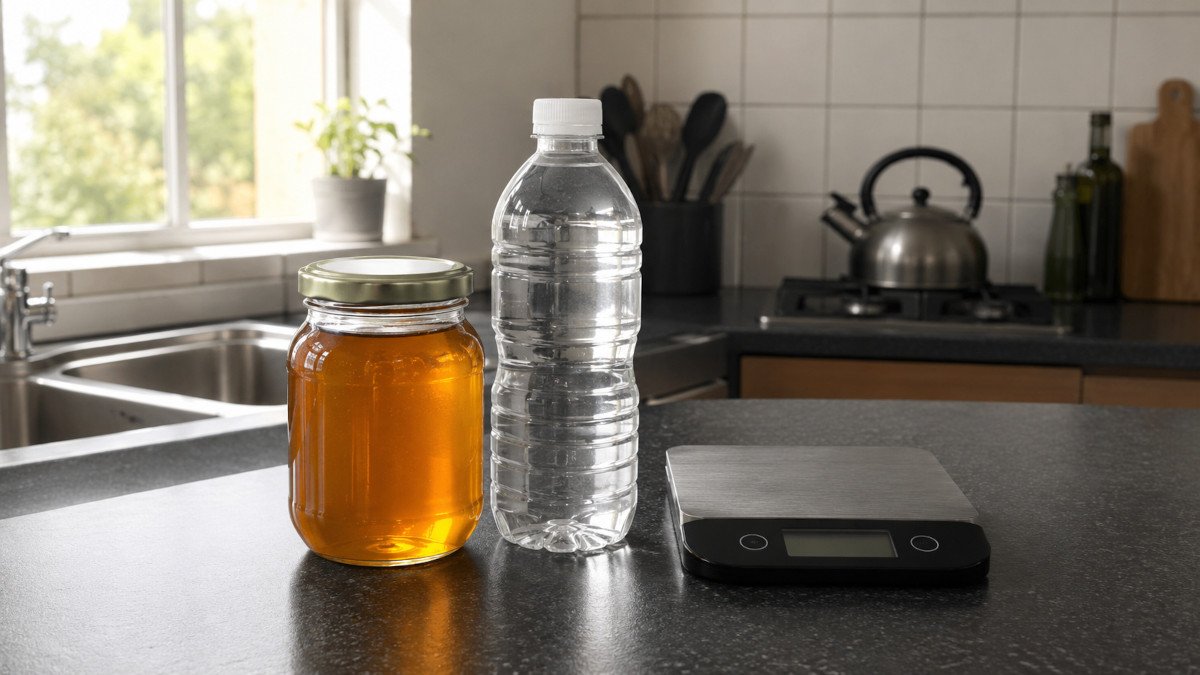
Honey is heavier than it looks, and that weight affects how it is bottled, labelled, transported, handled, and priced. A one-litre jar of honey does not weigh the same as a one-litre bottle of water, juice, or milk, which is one reason honey often feels expensive when compared with other liquids.
Why honey is sold by weight, not volume
Honey is usually sold by mass because it is a dense, variable natural product. Honey weighs about 1.38–1.45 kg per litre, compared with water at about 1 kg per litre, meaning honey is roughly 40–45% denser than water.
This matters to buyers because a 500 g jar of honey is not 500 ml. Depending on the honey, 500 g is usually closer to about 345–360 ml, because honey is heavier than water.
Honey is dense because it is mostly sugar with relatively little water. Codex honey standards state that most honey should have a moisture content of not more than 20%, while also setting minimum fructose and glucose levels for honey.
That low water content is part of what makes honey shelf-stable. Bees collect watery nectar, then reduce the moisture by processing and evaporating it inside the hive until it becomes a thick sugar-rich food.
Why a litre of honey costs more than a litre of other liquids
Comparing honey to other liquids by bottle size can be misleading. A one-litre bottle of water weighs about 1 kg, but a one-litre container of honey may weigh around 1.4 kg before the container itself is counted.
That means the buyer is getting more mass in the same volume. It also means the beekeeper, packer, courier, wholesaler, and retailer must move more weight for every litre sold.
Transport companies usually care about weight, volume, or both. Honey reaches weight limits faster than lighter liquids, so it can cost more to move per litre than water-based drinks.
Honey also needs stronger containers and better sealing. A thin bottle that works for juice may not be ideal for honey, because honey is heavy, sticky, and slow-flowing.
The hidden cost of honey weight
The cost problem starts before the jar reaches a shop shelf. Full honey drums can become very heavy, so producers need suitable drums, pallets, lifting equipment, and safe handling systems.
A standard 55-gallon or 208-litre honey drum can weigh close to 300 kg when full. That is a very different handling problem from moving light cartons of bottled water or fizzy drinks.
This affects small beekeepers as much as larger packers. A small producer may handle fewer drums, but each drum still requires careful lifting, storage, and transport.
There is also a risk cost. Spilled honey is not only a product loss; it is difficult to clean, attracts insects, and can damage packaging or storage areas.
Honey is expensive because it is concentrated
Honey is not a diluted drink. It is a concentrated food produced from nectar after bees remove much of the water.
A fruit juice, soft drink, or milk bottle contains a high percentage of water. Honey contains far less water and far more dissolved sugars, so the same volume contains more food solids.
That concentration is one reason honey tastes strong and stores well. It is also one reason it is more expensive per litre than many liquids that are mostly water.
In simple terms, buying honey is closer to buying a concentrated natural food than buying a drink. The jar looks small, but the product inside is heavy and dense.
Temperature makes honey harder to handle
Honey does not flow like water. Its thickness changes with temperature, which affects bottling, pumping, pouring, and transport.
Research on honey rheology shows that honey viscosity falls as temperature rises, and that viscosity is affected by water content as well as temperature. This is why warm honey pours more easily, while cold honey can become very slow to move.
Heating can help honey flow, but it must be controlled. Honey should not be heated or processed so much that its essential composition is changed or its quality is impaired.
This creates a practical cost. Honey may need gentle warming before bottling or pumping, but careless overheating can reduce quality.
Crystallisation adds another handling cost
Crystallisation is natural in honey. It happens when glucose separates from the liquid solution and forms crystals.
This does not mean the honey has gone bad. It means the honey has changed physical form, often from clear liquid to a thicker or grainier texture.
For transport and packing, crystallisation can be a problem. A drum of partly crystallised honey is much harder to pump or pour than a drum of liquid honey.
Re-liquefying crystallised honey takes time, energy, and suitable equipment. That extra handling can add cost before the product reaches the customer.
Moisture control protects honey quality
Honey attracts moisture from the air, so packaging must keep it sealed. If honey absorbs too much water, its quality and shelf stability can be affected.
Scientific work on honey moisture reduction notes that the amount of water in honey affects stability against fermentation and granulation, and that honey with high water content ferments more easily.
This is why producers care about moisture levels, sealing, and storage. A badly sealed container can turn a good product into a risky one.
Good packaging is therefore not just about appearance. It protects the honey’s weight, quality, flavour, and shelf life.
Why price per kilogram is fairer than price per litre
Honey is best compared by weight because weight gives a more honest measure. Volume can change with temperature, trapped air, crystallisation, and the way the honey settles in the container.
South Africa’s Legal Metrology Act requires products sold by mass to be sold by net mass, and it also deals with how measurable products must be declared and sold. This supports fair quantity statements for packaged goods.
For the buyer, this means a 500 g jar should be judged as 500 g of honey, not as a half-litre container. The jar size can confuse the eye, but the net weight is the useful comparison.
A practical comparison is this: 1 kg of honey is not 1 litre of honey. It is usually closer to about 700 ml, depending on density.
Why cheap honey can be a warning sign
Low price does not always mean poor quality, but very cheap honey should be checked carefully. Real honey has production, extraction, testing, packing, storage, transport, and retail costs.
Honey can also be adulterated with cheaper syrups or excessive moisture. Honey sold as honey should not have added food ingredients or other additions.
This is another reason weight, moisture, and composition matter. A watery or adulterated product may look like honey, but it is not the same as properly ripened honey.
For buyers, the safest approach is to compare honey by net weight, source, producer reputation, and label information. The cheapest jar is not always the best value.
How to Explain Honey to Consumers
- Honey costs more than many liquids because it is not just a sweet liquid. It is a dense, concentrated natural food that takes labour from bees, careful harvesting from beekeepers, and controlled handling from packers.
- It is heavy to move, slow to pump, sensitive to heat, prone to crystallisation, and dependent on proper sealing. Each of these factors adds cost before the jar reaches a shelf.
- A small jar of honey may seem expensive beside a larger bottle of juice or syrup. But the comparison is not equal, because honey carries more mass, more concentration, and more handling difficulty in the same space.
Conclusion
Honey is more expensive than many other liquids because it is heavier, denser, harder to move, and more demanding to pack and handle. Its low water content makes it valuable and shelf-stable, but that same concentration increases weight and transport cost.
The fairest way to judge honey is by net weight, not by jar size or volume. A smaller-looking jar can still contain a substantial amount of honey because honey is much heavier than water-based liquids.