
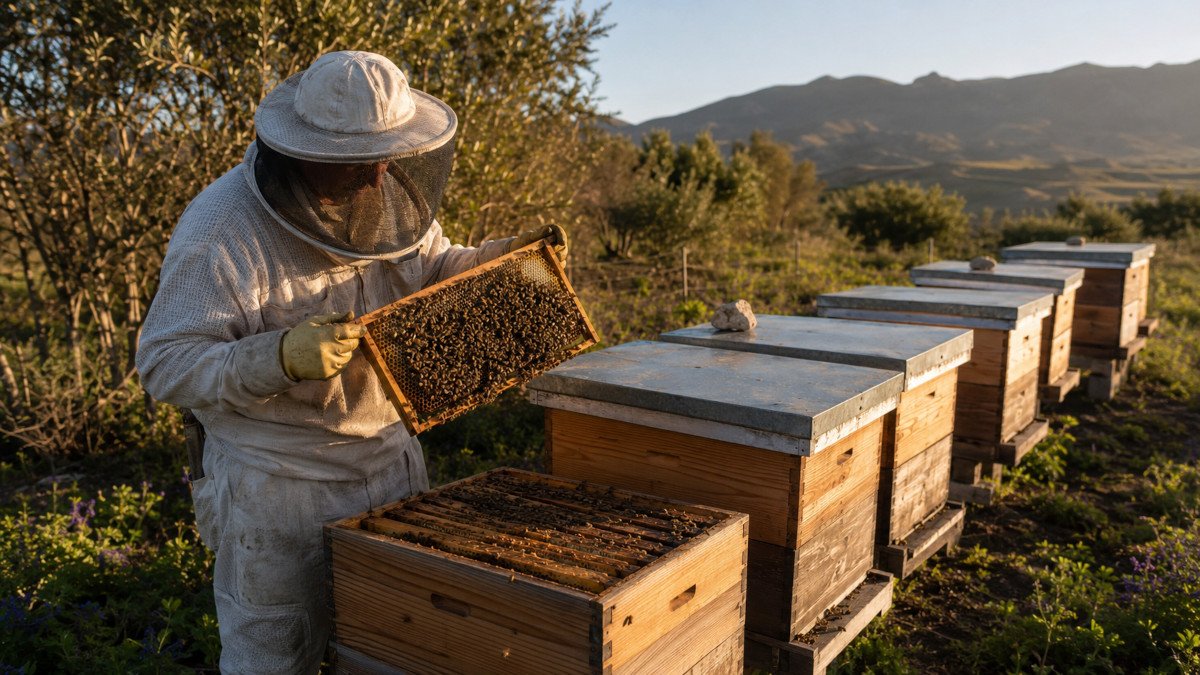
Responsible Honey Harvesting in South Africa
Responsible honey harvesting in South Africa starts with a simple rule: bees must come first. A careful bee farmer only removes honey that the colony can afford to lose, while leaving enough food for cold weather, poor forage periods, brood rearing, and colony recovery.
This matters because honey is not just a sweet product for people. For bees, honey is stored energy, and pollen is a protein source needed for brood, immunity, and colony strength.
Why Responsible Bee Farmers Leave Honey Behind
Honeybees store honey because nectar is seasonal. When flowering plants are scarce, the colony survives on what it collected during better months.
In South Africa, this is especially important because rainfall, drought, wildfires, crop flowering, veld condition, and urban forage all affect how much food bees can gather. Poor nutrition and starvation are major causes of bee deaths, and stronger, well-fed bees are more likely to survive winter and drought periods.
Responsible bee farmers therefore do not treat every full-looking hive as a harvest opportunity. They first ask whether the colony has enough honey, pollen, bees, brood, and forage prospects to remain healthy after the harvest.
South African Honeybees Are Part of a Larger Food System
South Africa has important local honeybee populations, including the Cape honeybee in the Western and parts of the Eastern Cape, and the African honeybee across much of the rest of the country.
SANBI data confirms:
- About 50 crops: That over 50 commercial crops in South Africa rely heavily on insect pollination, with the indigenous honeybee being the most vital, manageable pollinator.
- Deciduous fruit: Honeybees are critical for South Africa’s multi-billion rand deciduous fruit industry (including apples, pears, plums, peaches, and cherries), particularly in the Western and Eastern Cape. Proper pollination ensures the symmetrical shape required for fruit export markets.
- Vegetable seed crops: South Africa — especially the Klein Karoo region — is a major player in the global seed market. SANBI’s research (historically highlighted through initiatives like the Global Pollination Project) heavily focused on honeybee dependency in crops like onion hybrid seeds and lucerne seeds.
SANBI emphasizes that these insect-pollinated crops are worth over R10 billion annually and sustain at least 100,000 agricultural jobs across the country.
The value of bees is therefore much larger than the jars of honey on a shelf. ARC information estimates that commercial honeybee pollination adds about R3.2 billion per year to crop production in South Africa and supports agricultural activity linked to many jobs.
This is why responsible honey harvesting is also responsible farming. If bees are weakened by over-harvesting, poor forage, disease, pesticide exposure, or poor hive management, the problem reaches beyond honey production.
What Responsible Bee Farmers Harvest
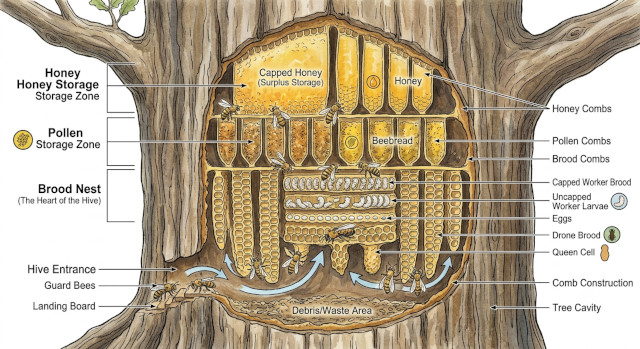
The main product harvested is surplus capped honey. This is honey stored by bees in comb cells and sealed with a wax capping when it has been ripened to a lower moisture level.
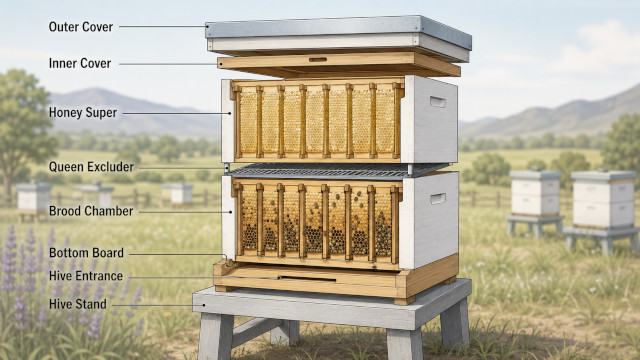
The word “surplus” is important. Responsible bee farmers harvest honey from the honey storage area of the hive, usually from frames placed above the brood nest, rather than stripping the colony of the food it needs to survive.
The beekeeper may also collect beeswax from the cappings removed during extraction. Other hive products, such as propolis or pollen, require more specialised management and should not be taken in a way that weakens the colony.
A responsible beekeeper does not harvest brood comb as honey. Brood comb is where the queen lays eggs and where young bees develop, so damaging it can reduce future colony strength.
Why Not All Honey Can Be Taken
A hive can look productive and still need most of its stores. A strong colony going into a good nectar flow may produce a harvestable surplus, while another colony in the same area may need its stores for survival.
Southerns Beekeeping Association explains that South African honey production varies widely and depends on nectar flow, colony strength, queen performance, pollen resources, hive space, pests, disease, and site security. It notes that one hive may produce 15 kg in one season and nothing in another.
This makes fixed promises about honey production unreliable. A responsible bee farmer does not harvest according to a sales target only, because the bees’ condition and the season must guide the decision.
When Honey Is Harvested in South Africa
There is no single honey harvesting date for all of South Africa. The best time depends on the region, rainfall pattern, forage plants, crop flowering, temperature, and colony strength.
In summer rainfall regions, honey flows often follow good rains and strong flowering periods. In the Western Cape and other winter rainfall areas, the seasonal pattern can differ, and local fynbos, canola, eucalyptus, fruit crops, and urban gardens may all play a role in forage availability.
The Western Cape Bee Industry Association advises that autumn is the time to harvest remaining surplus honey, but also says beekeepers must leave enough food for winter. It also advises feeding colonies with limited food reserves during winter, which shows that food reserves must be checked after the main season.
This is the practical difference between harvesting and over-harvesting. Responsible bee farmers do not simply harvest because the calendar says it is time; they harvest when the colony has genuine surplus.
How Responsible Bee Farmers Decide What Is Surplus
- A beekeeper normally checks several signs before harvesting. The first sign is whether the frames contain capped honey, because uncapped nectar may still contain too much moisture.
- The second sign is hive weight and food position. A responsible beekeeper checks whether the brood box and nearby frames still contain enough stores for the bees after the honey super is removed.
- The third sign is colony strength. A strong population of worker bees can protect stores, regulate hive temperature, care for brood, and recover after a harvest.
- The fourth sign is local forage. If flowering plants are ending, drought is building, or cold weather is approaching, the beekeeper should be more conservative.
- The fifth sign is the brood nest. If the colony has brood to feed, it needs stored honey and pollen to raise the next generation of bees.
How Honey Is Harvested Without Starving Bees
Responsible harvesting usually begins with a hive inspection.
The beekeeper checks the colony, confirms that the honey is harvestable, and removes only the frames or supers that contain surplus honey.
Bees are moved off the honey frames carefully, using methods that reduce stress and avoid unnecessary damage. The beekeeper should work calmly, avoid crushing bees, and keep the hive open for as short a time as practical.
The honey is then extracted from the frames. In many managed hives, the wax cappings are removed, the honey is spun out with an extractor, and the empty comb can be returned for bees to clean and refill later.
This method is less wasteful than destroying comb. Drawn comb takes energy for bees to build, so preserving good comb helps the colony use future nectar flows more efficiently.
Why Winter Stores Matter
Winter does not affect all South African regions in the same way, but most colonies face periods when nectar is limited. During those times, stored honey becomes the colony’s main energy reserve.
Honey provides fuel for adult bees. It also supports the colony while it maintains the brood nest and survives cold, wet, windy, or low-forage conditions.
Pollen is also important because it supports brood rearing and bee health. Honeybees need a diversity of pollen sources, and feeding is needed when colonies are low in stored food and natural forage is limited.
For this reason, responsible bee farmers think beyond the honey jar. They look at whether the colony has the food balance needed for the next season.
What Happens If Food Stores Are Too Low
If food stores are too low, the responsible choice is to harvest less or not harvest at all. A weak colony with limited stores should be helped to recover, not pushed harder.
The beekeeper may reduce unused hive space, protect the hive from weather, monitor pests and disease, and feed where needed. The Western Cape Bee Industry Association includes winter guidance such as monitoring hives, reducing entrances during cold spells, managing condensation risk, and continuing to feed colonies with limited food reserves.
Feeding should not become an excuse to remove all natural honey. It is a support tool for difficult periods, not a replacement for responsible harvesting.
The Difference Between Ethical Harvesting and Maximum Extraction
How much money can I make vs How much honey should I take.
Maximum extraction asks, “How much honey can I take?” Ethical harvesting asks, “How much honey can I take without weakening the colony?”
That difference changes the whole business. A responsible bee farmer accepts that some seasons will produce less honey, and that some hives should be left alone.
This can make real local honey more expensive than mass-market sweeteners. The cost includes hive checks, transport, equipment, colony losses, seasonal risk, extraction, packaging, and the discipline of leaving bees with their own food.
Cheap honey is not always a fair comparison. Buyers should remember that a responsible jar of honey reflects living colonies, seasonal limits, and careful beekeeping.
What Consumers Can Ask Before Buying Honey
Consumers can support responsible South African bee farmers by asking simple questions.
Good questions include where the honey comes from, whether it is local, whether the beekeeper manages the hives, and whether the honey is harvested from surplus stores.
A responsible seller should be comfortable explaining that honey varies by season and forage source. Real honey can differ in colour, flavour, aroma, thickness, and crystallisation pattern, because bees collect nectar from different plants at different times.
Consumers can also ask whether the beekeeper is registered and whether they follow recognised beekeeping practices. In South Africa, beekeeper registration is part of the formal beekeeping environment, and SABIO refers to compulsory registration of beekeepers and bee removal service providers with the Department of Agriculture, Land Reform and Rural Development.
This does not mean every small beekeeper is easy to verify at shelf level. It does mean consumers should value traceability, local knowledge, and direct relationships with producers.
Why Responsible Harvesting Protects Future Honey
Responsible harvesting protects next season’s honey by keeping colonies alive and strong. A colony that survives winter with enough food can build up faster when forage improves.
This matters because honey production depends on strong worker populations at the right time. If the colony is weak when the main nectar flow begins, it may miss the best harvest window even if the veld or crop flowers well.
Responsible bee farmers therefore manage for continuity. They want bees to survive, build, forage, pollinate, and produce year after year.
This is better for the beekeeper, the farmer, the consumer, and the local environment. It also fits the basic truth of beekeeping: honey is only available because bees produced more than they needed at that time.
Check Responsible Honey
Consumers cannot prove from the jar alone whether honey was harvested responsibly. The best way is to evaluate the beekeeper’s transparency, harvesting logic, seasonal honesty, and willingness to explain how they protect the colony.
A responsible honey harvester should be able to explain what they harvest, when they harvest, and what they leave behind for the bees.
The Main Consumer Test
The strongest question is this:
“How do you decide how much honey to leave for the bees?”
A responsible beekeeper should not answer only with “we harvest when the hive is full.” A better answer would mention surplus honey, capped frames, hive strength, season, forage conditions, and winter food reserves.
The key idea is that honey should be harvested only when the colony has more than it needs.
If the beekeeper speaks as if all honey in the hive belongs to the seller, that is a warning sign.
Good Questions to Ask
Consumers can ask practical questions without sounding suspicious:
| Question | Good Sign | Warning Sign |
|---|---|---|
| Do you harvest all year? | “No, it depends on the season and nectar flow.” | “Yes, whenever there is honey.” |
| Do you leave honey for winter? | “Yes, we leave enough stores and check weak colonies.” | “We take it all and feed syrup.” |
| Do you harvest from the brood box? | “No, we mainly harvest surplus honey from supers.” | “We remove whatever comb has honey.” |
| Do all hives produce honey every season? | “No, some produce little or none.” | “All hives produce every season.” |
| What happens in drought or poor forage years? | “We harvest less or skip harvesting.” | “We still harvest to meet demand.” |
| Is the honey from your own hives? | Clear answer with area or forage source. | Vague answer or no traceability. |
Signs of a Responsible Honey Seller
A responsible honey seller is usually comfortable with seasonal limits. They may say that honey availability changes, that certain flavours are only available after specific flowering periods, or that some harvests are smaller than expected.
This honesty matters. Honey is not a factory product, so supply should not always be perfectly consistent.
Another good sign is traceability. The seller should be able to tell you the general area, forage type, or harvest season, even if they do not reveal exact hive locations for security reasons.
A responsible beekeeper may also explain that some hives are left alone. Strong colonies may produce harvestable honey, while weaker colonies may need all their stores.
Warning Signs for Consumers
- The biggest warning sign is the claim that honey can be harvested heavily without affecting the bees. Bees store honey for a reason, and taking too much can weaken the colony.
- Another warning sign is very cheap honey sold with no origin story, no producer detail, and no seasonal variation. Price alone does not prove bad practice, but very cheap honey should raise questions.
- Be cautious if the seller cannot explain whether the honey is local, imported, blended, filtered, heated, or bought in bulk. A reseller may still sell good honey, but they may not know how the bees were managed.
- Also be cautious if the beekeeper treats sugar feeding as normal replacement food after removing all honey. Feeding can help a colony during shortage, but it should not be used as an excuse to strip the hive.
Can Labels Prove Responsible Harvesting?
Labels can help, but they do not prove everything. A label can show producer details, contact information, batch details, and sometimes the region or floral source.
However, a label cannot show whether enough honey was left in the hive. That still depends on the beekeeper’s practice.
This is why direct buying is useful. Farmers’ markets, local beekeepers, farm stalls, and small-batch sellers often give consumers a chance to ask questions.
A Simple Scoring Method
Consumers can use a basic 5-point check:
| Score | Question |
|---|---|
| 1 | Can the seller explain where the honey comes from? |
| 1 | Can they explain when it was harvested? |
| 1 | Can they explain what they leave for the bees? |
| 1 | Do they admit that harvests vary by season? |
| 1 | Do they avoid claiming that every hive always produces surplus honey? |
A seller scoring 4 or 5 is more likely to be transparent. A seller scoring 0 to 2 may still sell real honey, but the consumer has little evidence of responsible harvesting.
Best Practical Advice
Consumers should not expect a perfect guarantee. Instead, they should look for a beekeeper who speaks like a livestock farmer, not only like a trader.
The responsible beekeeper talks about colony strength, forage, winter, rainfall, flowering periods, brood, and hive condition. The less responsible seller talks only about jars, supply, and price.
Buy honey from people who can explain how the bees were protected before the honey was bottled.
Conclusion
The responsible bee farmers of South Africa are not defined only by their labels or marketing. They are defined by how they manage hives when nobody is watching.
They harvest capped surplus honey, protect the brood nest, leave food for winter, monitor forage conditions, and accept that some seasons produce little or no harvest. That restraint is what keeps honey linked to healthy bees rather than short-term extraction.
For Honeybuzz readers, the takeaway is simple. Good honey should come from beekeeping that respects the colony first and the jar second.
FAQ: Responsible Honey Harvesting Terms
What is empty comb?
Empty comb is beeswax comb that does not currently contain honey, nectar, pollen, eggs, larvae, or capped brood. It is not useless, because bees can use it again when nectar or brood-rearing conditions improve.
For a beekeeper, empty comb is valuable because bees have already spent energy building it. Returning clean empty comb to a strong hive can help bees store nectar faster during the next honey flow.
What is drawn comb?
Drawn comb is beeswax comb that bees have already built out from a foundation or frame. It has formed wax cells that can be used for honey storage, pollen storage, or brood rearing, depending on where it is in the hive.
Drawn comb saves the colony time and energy. Bees do not need to start from a flat sheet or empty frame, so they can use available nectar more efficiently when forage is good.
What is honey surplus?
Honey surplus is the honey a colony has stored beyond what it needs for its own survival and normal colony work. This is the honey a responsible beekeeper may consider harvesting.
The difficult part is knowing what is truly surplus. A strong hive may have harvestable surplus in a good season, while a weaker hive in the same area may need all its honey for winter or a poor forage period.
What is the honey storage area?
The honey storage area is the part of the hive where bees store honey for later use. In managed hives, this is often in boxes or frames above the brood nest, sometimes called honey supers.
Responsible beekeepers usually harvest from this storage area, not from the brood nest. This helps protect the queen, developing bees, and the food the colony needs close to the brood.
What is brood?
Brood means the developing young bees inside the hive. It includes eggs, larvae, and pupae before they emerge as adult bees.
Brood is usually found in the brood nest, where nurse bees feed and care for the young bees. A responsible honey harvester avoids damaging brood comb because it affects the future strength of the colony.
What is the brood nest?
The brood nest is the central area of the hive where the queen lays eggs and young bees develop. It is normally surrounded by food stores such as pollen and honey so nurse bees can feed the brood.
This area should be disturbed as little as practical during honey harvesting. Removing too much honey from around the brood nest can place pressure on the colony, especially before winter or during poor forage conditions.
What is capped honey?
Capped honey is honey that bees have sealed inside wax cells. The wax cap shows that the bees have ripened the nectar into honey and sealed it for storage.
Beekeepers usually prefer harvesting capped honey because it is more likely to have the correct moisture level. Uncapped nectar or unripe honey may contain too much moisture and can ferment more easily.
What is uncapped honey or nectar?
Uncapped honey or nectar is liquid stored in open comb cells that bees have not yet sealed with wax. It may still be in the drying and ripening stage.
Responsible beekeepers are careful with uncapped frames. Harvesting too much uncapped nectar can reduce the colony’s food reserves and may also lead to poorer-quality honey.
What is a honey super?
A honey super is a box placed on a hive to give bees extra space to store surplus honey. It usually sits above the brood box in a managed hive.
When conditions are good, bees may fill the super with honey that can later be harvested. A responsible beekeeper still checks whether that honey is surplus before removing it.
What is a brood box?
A brood box is the main part of a managed hive where the queen lays eggs and the colony raises young bees. It also contains food close to the brood nest.
Responsible honey harvesting should not strip the brood box of the food the colony needs. The brood box is the colony’s living centre, while the honey super is usually the main harvest area.
What is forage?
Forage means the flowers, plants, and other natural food sources bees use for nectar, pollen, propolis, and water. Nectar becomes honey, while pollen helps support brood rearing and bee health.
Forage changes with the season, rainfall, drought, farming activity, and local vegetation. Responsible bee farmers consider local forage before harvesting because a hive with limited future forage may need more stored honey left behind.
What is a nectar flow?
A nectar flow is a period when plants in an area produce enough nectar for bees to collect and store. During a strong nectar flow, a healthy colony may build up honey stores quickly.
Honey harvesting is usually linked to nectar flows, but not every flow creates harvestable surplus. Weather, colony strength, pests, queen condition, and available comb space all affect the final result.
What is winter feeding?
Winter feeding is the practice of giving bees supplementary food when their natural stores are too low. It may involve sugar syrup or other suitable feeding methods used by experienced beekeepers.
Feeding should not be used as an excuse to remove all the bees’ honey. In responsible beekeeping, feeding is a support measure during shortage, not a replacement for leaving enough natural stores.
What is over-harvesting?
Over-harvesting happens when a beekeeper removes too much honey and leaves the colony short of food. This can weaken the bees, reduce brood rearing, and increase the risk of colony loss during winter or poor forage periods.
A responsible beekeeper avoids over-harvesting by checking colony strength, stored food, brood condition, season, and local forage. The aim is to harvest only what the bees can spare.
What is responsible honey harvesting?
Responsible honey harvesting means taking only the honey that is genuinely surplus to the colony’s needs. It also means protecting brood, leaving food for winter, checking hive condition, and accepting that not every hive should be harvested every season.
For consumers, this is the key point. Responsible honey comes from beekeepers who manage bees as living colonies, not only as honey-producing units.