

Stellenbosch Honey and Vita Bee
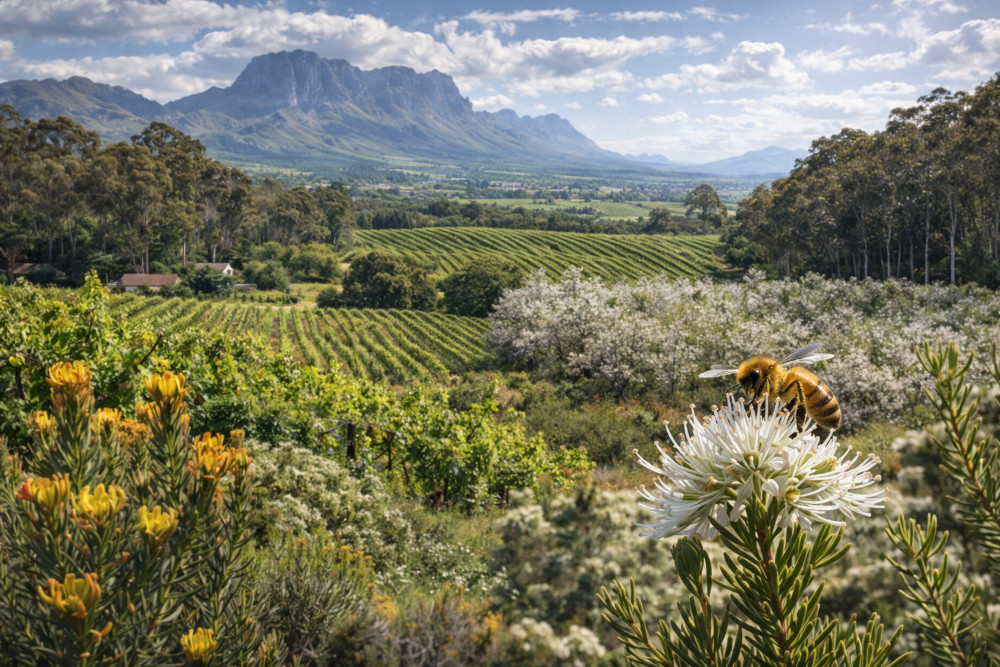
Stellenbosch in the Western Cape is one of South Africa’s most diverse honey regions. Vineyards, orchards, eucalyptus belts, and indigenous fynbos create a nectar landscape that produces distinctive raw honey varieties throughout the year.
Within this environment, local honey farms and farm stalls supply both residents and visitors with fresh, minimally processed honey. One well-known outlet in the region is Vita Bee, a honey farm stall located on the agricultural corridor north of Stellenbosch.
Understanding the regional honey ecosystem helps explain why outlets like Vita Bee exist and how they fit into the broader Cape Winelands beekeeping economy. This article explains the flora, the honey types, and the role of Vita Bee in supplying honey and bee-related services.
Honey Production in the Stellenbosch Region
Beekeeping in Stellenbosch forms part of the broader Western Cape pollination and honey industry. The region’s Mediterranean climate supports flowering cycles across vineyards, fruit orchards, and indigenous vegetation.
The honeybee subspecies most commonly associated with the Western Cape is Apis mellifera capensis, often referred to as the Cape honeybee. This subspecies is adapted to the local environment and plays a major role in agricultural pollination.
Large numbers of hives in the region are not dedicated exclusively to honey harvesting. Many are used primarily for pollination contracts with farmers growing deciduous fruits such as apples, pears, plums, and almonds.
During flowering seasons, beekeepers transport hives between agricultural areas such as the Overberg, Wellington, and Malmesbury. This movement allows bees to pollinate crops while also gathering nectar that later contributes to honey harvests.
Honey production itself usually occurs after strong nectar flows. In many Western Cape operations, honey may be harvested once or twice per year depending on rainfall, flowering cycles, and hive strength.
This agricultural context explains why many honey producers sell directly from farm stalls or local markets. The stall functions as a retail outlet for honey produced during the pollination cycle.
Flora Around Stellenbosch That Shapes Honey
The flavour and colour of honey depend heavily on the nectar plants available to bees. The Stellenbosch region contains several dominant nectar sources that influence honey characteristics.
Eucalyptus (Blue Gum)
Eucalyptus trees, often called blue gum in South Africa, are widespread in the Western Cape. Although the tree is not indigenous, it has become a major nectar source for bees.
Blue gum honey is typically light amber in colour with a mild sweetness. Because eucalyptus trees flower at predictable times, they often produce reliable nectar flows that support commercial honey harvesting.
Fynbos Vegetation
Stellenbosch lies within the Cape Floral Kingdom, one of the world’s most biodiverse plant regions. Indigenous fynbos plants produce nectar that results in distinctive honey.
Fynbos honey tends to be darker and stronger in flavour compared with blue gum honey. Depending on the plant species involved, it can show earthy, herbal, or slightly bitter taste notes.
This honey is sought after by consumers who prefer complex flavour profiles. Because fynbos nectar flows can be irregular, pure fynbos honey is often less abundant than agricultural or eucalyptus honey.
Canola and Agricultural Crops
Bees foraging in nearby agricultural areas often collect nectar from canola fields during spring. Canola honey is usually pale and crystallizes relatively quickly.
Fruit blossoms in orchards around the Cape Winelands also contribute nectar during pollination periods. These blossom honeys can produce light, aromatic honey varieties.
Because bees forage over wide areas, many Stellenbosch honeys are multi-floral blends reflecting several nectar sources.
Overview of Vita Bee Stellenbosch
Caption: Farm stalls selling raw honey allow customers to buy directly from producers or refill containers.
Vita Bee operates a honey farm stall located at Klein Nooitgedacht Farm outside Stellenbosch along the R304 (Koelenhof Road). This location places the stall within an agricultural corridor connecting Stellenbosch with surrounding farming regions.
Farm stalls in this area often function as direct-to-consumer outlets where honey harvested from local hives is sold without extensive processing. This retail model allows producers to sell fresh honey close to the source.
Visitors typically stop at such stalls when travelling through the wine and farming districts around Stellenbosch. The format resembles a small agricultural shop rather than a large retail store.
By operating near the production area, the stall can supply honey quickly after harvesting. This is one reason local customers often prefer farm stall honey compared with supermarket products.
Honey Products Associated with Vita Bee
Local honey stalls generally stock a range of bee products derived directly from the hive. Vita Bee’s offerings are centred around raw honey but often include other bee-related items.
Raw Honey
Raw honey is honey that has not been heavily heated or filtered. This allows pollen grains, enzymes, and natural compounds to remain in the product.
Consumers often seek raw honey because it retains the natural characteristics of the nectar source. The taste, colour, and aroma therefore vary depending on the season and the plants visited by bees.
Honey on Tap
Some honey outlets offer refill stations sometimes called “honey on tap.” Customers bring their own containers and refill them with bulk honey.
This method reduces packaging waste and allows customers to buy larger quantities. It is commonly used by farm stalls and small honey producers.
Multiple Container Sizes
Honey is normally sold in several container sizes. Small jars are aimed at household use while larger containers such as one-kilogram tubs or litre buckets are suitable for frequent users.
Bulk containers are often preferred by families, bakeries, or small food producers who use honey as an ingredient.
Secondary Hive Products
Besides honey, some stalls carry other products derived from the hive. These can include beeswax blocks, propolis, pollen, and occasionally beekeeping supplies.
These products are usually sold in smaller quantities but remain part of the traditional range associated with beekeeping operations.
Bee-Related Services in the Region
Many honey producers also provide services related to beekeeping. These services are often essential for maintaining healthy bee populations in both rural and urban environments.
Bee Removal
Bee colonies sometimes establish themselves in buildings, roofs, or trees in residential areas. Ethical removal services relocate the bees rather than destroying the colony.
The bees are transferred into managed hives where they can continue to pollinate crops and produce honey. This practice supports both environmental conservation and agricultural productivity.
Beekeeping Support
Experienced beekeepers often assist new hobbyists with equipment advice, hive placement, or general management practices. This support helps maintain healthy colonies and reduces the risk of disease or colony loss.
Advice may include selecting suitable hive boxes, managing swarms, and harvesting honey safely.
Contact and Location Information
Visitors looking for honey or bee-related services in the Stellenbosch area often contact producers directly or visit their farm stalls.
Address: Klein Nooitgedacht / Vita Bee, R304 Koelenhof Road, Stellenbosch, 7600, South Africa.
Phone: +27 79 473 3654
Farm stalls in agricultural regions may operate with flexible hours depending on harvest seasons or market days. Visitors often confirm availability by phone before travelling.
Frequently Asked Questions
Is Stellenbosch honey raw and unprocessed?
Many farm stall honeys in the Western Cape are sold raw or minimally processed. This means the honey is usually strained to remove debris but not heated extensively.
Raw honey retains pollen and enzymes that reflect the nectar sources visited by bees.
Can local honey be purchased in bulk?
Farm stalls frequently sell honey in bulk containers such as one-kilogram tubs or refillable containers. Bulk purchases are common among households, bakeries, and small food businesses.
Some producers also supply larger quantities directly to retailers or distributors.
Why does Western Cape honey crystallize?
Crystallization is a natural process in raw honey. The speed of crystallization depends on the ratio of glucose to fructose in the nectar source.
Honeys derived from plants such as canola tend to crystallize faster. Crystallization does not indicate spoilage or adulteration.
Conclusion
Stellenbosch sits within one of the most botanically diverse honey regions in South Africa. Vineyards, orchards, eucalyptus stands, and fynbos vegetation all contribute nectar that shapes the flavour and characteristics of local honey.
Within this environment, farm stalls and small honey outlets provide a direct connection between beekeepers and consumers. Vita Bee operates as one of these outlets along the agricultural corridor near Stellenbosch.
By supplying raw honey, refill options, and bee-related products, farm stalls play a practical role in the local honey economy. They allow consumers to buy honey close to the source while supporting the regional beekeeping industry.