

Honey crystallisation is one of the most common reasons people question whether their honey is still safe or real. Many consumers assume crystallised honey has gone bad, been stored incorrectly, or contains added sugar, even though crystallisation is a natural and expected process.
This article explains why honey crystallises, what it means for quality and safety, and when crystallised honey should or should not be used.
What Is Honey Crystallisation?
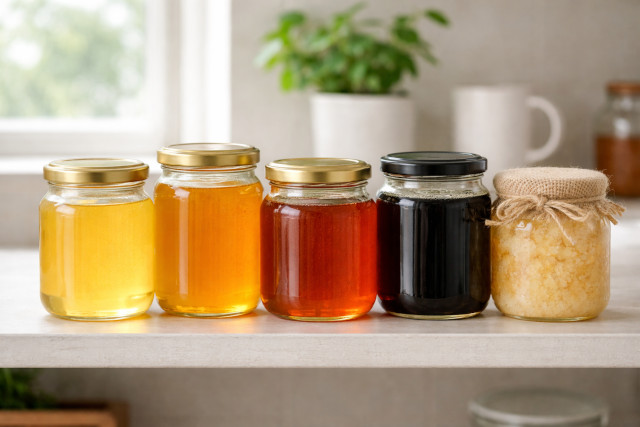
Honey crystallisation is the natural process where glucose separates from water and forms solid crystals. This causes honey to change from a clear liquid into a thicker, grainy, or fully solid state.
Crystallisation does not mean honey is spoiled, expired, or unsafe. It is a physical change, not a chemical one, and it happens to most real honey over time.
Why Does Honey Crystallise?
Honey is a supersaturated sugar solution made mainly of glucose and fructose. Glucose is less soluble in water than fructose, so it naturally comes out of solution and forms crystals.
The speed of crystallisation depends on the balance between glucose and fructose. Honeys with higher glucose content crystallise faster than those with more fructose.
Does All Honey Crystallise?
Most real honey will crystallise eventually. Some honeys crystallise within weeks, while others stay liquid for months or even years.
Honey that never crystallises may have been highly filtered, heated, or diluted. These processes slow or prevent crystallisation but can also reduce natural enzymes and flavour complexity.
What Factors Make Honey Crystallise Faster?
Several conditions influence how quickly honey crystallises. Temperature is one of the most important factors affecting crystal formation.
Honey stored between 10°C and 18°C crystallises faster than honey stored at warmer or colder temperatures. This is why honey often crystallises in kitchen cupboards during cooler months.
The Role of Pollen and Natural Particles
Raw and minimally filtered honey contains pollen, wax particles, and air bubbles. These act as “seed crystals” that help glucose crystals form.
Filtered honey has fewer particles and crystallises more slowly. This is one reason raw honey tends to crystallise faster than supermarket honey.
Does Crystallised Honey Mean It Is Fake?
Crystallisation is actually a strong indicator that honey is real. Fake or heavily adulterated honey often remains liquid for long periods.
While crystallisation alone does not guarantee purity, liquid honey that never crystallises should be viewed with caution. Real honey changes over time.
Is Crystallised Honey Still Safe to Eat?
Crystallised honey is completely safe to eat if it smells normal and shows no signs of fermentation. The nutritional content remains largely unchanged.
Honey’s natural acidity and low moisture content prevent harmful bacteria from growing. Crystallisation does not reduce safety or shelf life.
Does Crystallisation Affect Honey Quality?
Crystallisation does not reduce honey’s energy value, minerals, or natural sugars. The main changes are texture and mouthfeel.
Some people prefer crystallised honey because it spreads easily and does not drip. Others prefer liquid honey for mixing into drinks or baking.
Why Some Honeys Crystallise Differently
Different honeys crystallise in different ways. Some form fine, smooth crystals, while others become coarse or gritty.
The crystal texture depends on the nectar source, glucose levels, and how fast crystallisation occurs. Slow crystallisation usually creates larger crystals.
South African Honeys and Crystallisation
South African honeys vary widely due to diverse floral sources. Citrus honey often crystallises quickly and evenly due to higher glucose levels.
Fynbos and bush honeys may crystallise more slowly and form darker, denser crystals. These variations are natural and expected.
Is Creamed Honey the Same as Crystallised Honey?
Creamed honey is intentionally crystallised under controlled conditions. Fine crystals are encouraged to form evenly, creating a smooth, spreadable texture.
This process does not add sugar or alter the honey chemically. Creamed honey is simply crystallised honey done on purpose.
How to Turn Crystallised Honey Back Into Liquid
Crystallised honey can be returned to liquid form using gentle heat. Place the jar in warm water and stir occasionally until crystals dissolve.
Water should be warm, not boiling. Excessive heat can damage enzymes and aroma compounds, especially in raw honey.
What Not to Do With Crystallised Honey
Avoid microwaving honey or heating it directly on a stove. High heat can degrade natural enzymes and affect flavour.
Do not add water to thin honey, as this increases the risk of fermentation. Proper honey does not need dilution.
When Crystallised Honey Should Not Be Used
Crystallised honey should not be used if it smells sour, alcoholic, or foamy. These are signs of fermentation caused by excess moisture.
Fermented honey is not dangerous in small amounts but may taste unpleasant. In rare cases, fermentation indicates improper storage.
How to Store Honey to Control Crystallisation
Store honey in a sealed container at room temperature to slow crystallisation. Avoid refrigeration, as cold temperatures encourage crystal formation.
Dry storage conditions help prevent fermentation. Always use clean utensils to avoid introducing moisture.
Crystallisation vs Spoilage
Crystallisation is reversible and harmless. Spoilage involves fermentation, moisture, and unwanted microbial activity.
Understanding this difference helps consumers avoid throwing away perfectly good honey.
Why Crystallisation Confuses Consumers
Modern consumers associate liquid consistency with freshness. This expectation comes from exposure to processed honey that stays liquid unnaturally long.
Traditional and raw honey behave differently and reflect their natural composition.
How Crystallisation Fits Into Honey Essentials
Crystallisation is a normal part of honey’s life cycle. Knowing this builds confidence when buying raw or local honey.
This topic supports the broader Honey Essentials hub by addressing everyday questions that affect purchasing and storage decisions.
Conclusion
Honey crystallisation is natural, expected, and often a sign of real honey. It does not mean honey has expired, spoiled, or become unsafe.
Understanding why honey crystallises helps consumers make informed choices and trust the natural behaviour of this food.