
Honey is widely used as a natural sweetener, home remedy, and everyday food ingredient, but many people are unsure how much honey is safe to consume on a daily basis. This article answers that question clearly, using nutrition facts, practical guidance, and South African context, and it forms part of the Honey Essentials consumer hub.
Honey is natural, but it is still a concentrated sugar source. Understanding quantity, frequency, and context matters more than whether honey is raw or processed.
Short Answer: Daily Honey Intake
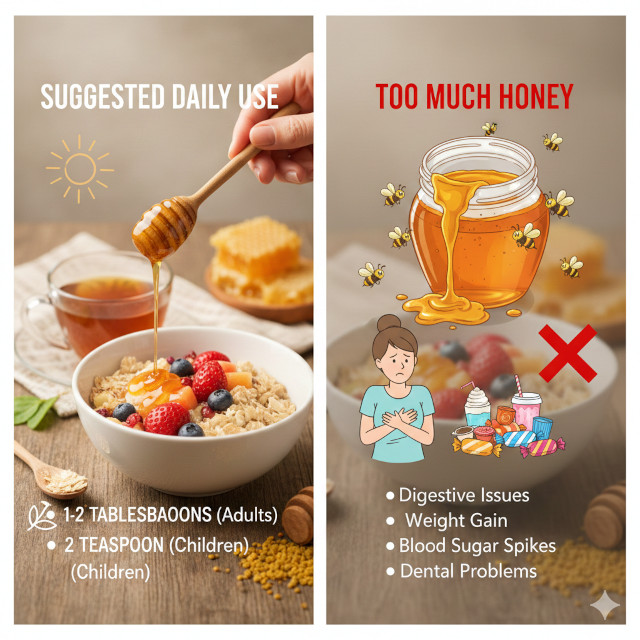
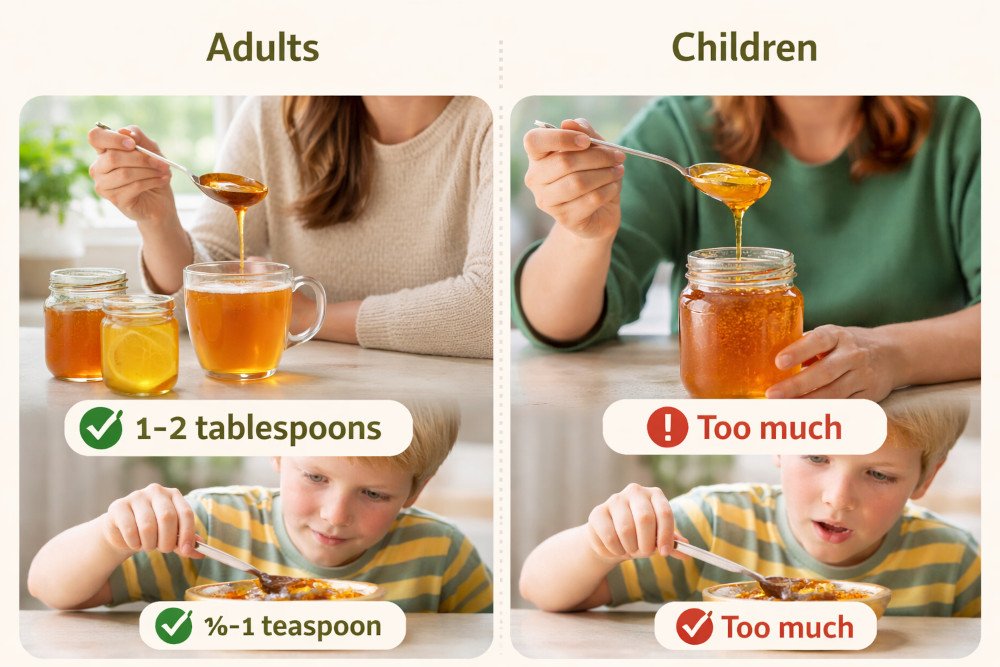
For most healthy adults, 1 to 2 tablespoons (15–30 ml) of honey per day is generally considered a reasonable amount. This intake fits within general dietary sugar guidelines when honey replaces, rather than adds to, other sugars.
Children over one year old should consume less, while people with specific health conditions may need tighter limits.
Why Honey Intake Needs Limits
Honey is often perceived as unlimited because it is natural. This assumption leads to overuse, especially in tea, cooking, and home remedies.
Honey is approximately:
- 80% natural sugars
- Mostly fructose and glucose
- About 64 calories per tablespoon
Excess intake can contribute to:
- Elevated blood sugar
- Weight gain
- Dental issues
- Reduced metabolic benefits
Moderation allows honey to remain beneficial rather than counterproductive.
Recommended Daily Honey Intake by Group
Healthy Adults
Most adults can safely consume:
- 1 tablespoon daily for regular use
- Up to 2 tablespoons when replacing refined sugar entirely
This applies when honey is used instead of sugar, not in addition to it.
Children (Over 1 Year Old)
Honey is not safe for infants under 12 months due to the risk of botulism.
For children over one year:
- Ages 1–3: ½ teaspoon occasionally
- Ages 4–12: 1 teaspoon daily
Honey should not be treated as a snack but as a sweetener or remedy.
People with Diabetes or Insulin Resistance
Honey affects blood sugar similarly to other sugars, despite its natural origin.
General guidance:
- Limit to ½ to 1 teaspoon, if used at all
- Consume with food, not on an empty stomach
- Monitor blood glucose response individually
Honey should never be assumed to be “diabetic-safe” without personal testing.
Athletes and Physically Active Individuals
Active individuals may tolerate slightly higher intake due to glucose utilisation during exercise.
Typical use:
- 1 tablespoon before or after exercise
- Used as a quick energy source rather than a daily sweetener
This use is functional rather than habitual.
Does Raw Honey Change the Safe Amount?
Raw honey contains enzymes, pollen, and trace compounds that processed honey may lack. However, raw honey still contains the same sugar load.
Raw honey does not:
- Cancel out calories
- Eliminate blood sugar impact
- Allow unlimited intake
The safe daily amount remains the same regardless of processing.
Honey vs Sugar: Does Honey Allow More?
Honey is sweeter than sugar, meaning less is often needed for the same taste. This is where honey’s advantage lies.
Comparison per teaspoon:
- Sugar: ~16 calories
- Honey: ~21 calories, but sweeter
When used correctly, honey can reduce overall sugar intake. When overused, it increases it.
Honey for Health Purposes: Does Dosage Change?
Honey is often used for:
- Cough relief
- Sore throat
- Digestive support
- Sleep support
In these cases, short-term intake may increase slightly:
- 1 teaspoon before bed
- 1 teaspoon every few hours for cough, limited to short periods
This should not become a daily habit once symptoms resolve.
Signs You May Be Eating Too Much Honey
Excess honey intake may show up as:
- Frequent blood sugar spikes
- Cravings for sweet foods
- Digestive discomfort
- Unintended weight gain
These are not signs of honey being harmful, but of quantity exceeding context.
Best Ways to Use Honey Without Overconsumption
Practical strategies include:
- Using honey only once per day
- Measuring instead of pouring freely
- Replacing sugar rather than adding honey
- Using darker, stronger-flavoured honeys that require less volume
Stronger honeys often lead to lower overall intake.
South African Context: Typical Honey Use
In South Africa, honey is commonly added to:
- Rooibos tea
- Warm lemon drinks
- Home cough remedies
- Cooking and baking
These uses often overlap, leading to accidental overuse. Awareness, not avoidance, is the solution.
Key Takeaways
- Honey is safe daily in moderate amounts
- 1–2 tablespoons per day suits most healthy adults
- Children and diabetics require lower limits
- Raw honey does not change sugar content
- Honey works best when replacing refined sugar, not adding to it
Honey remains a useful and traditional food when used with intention and restraint.