
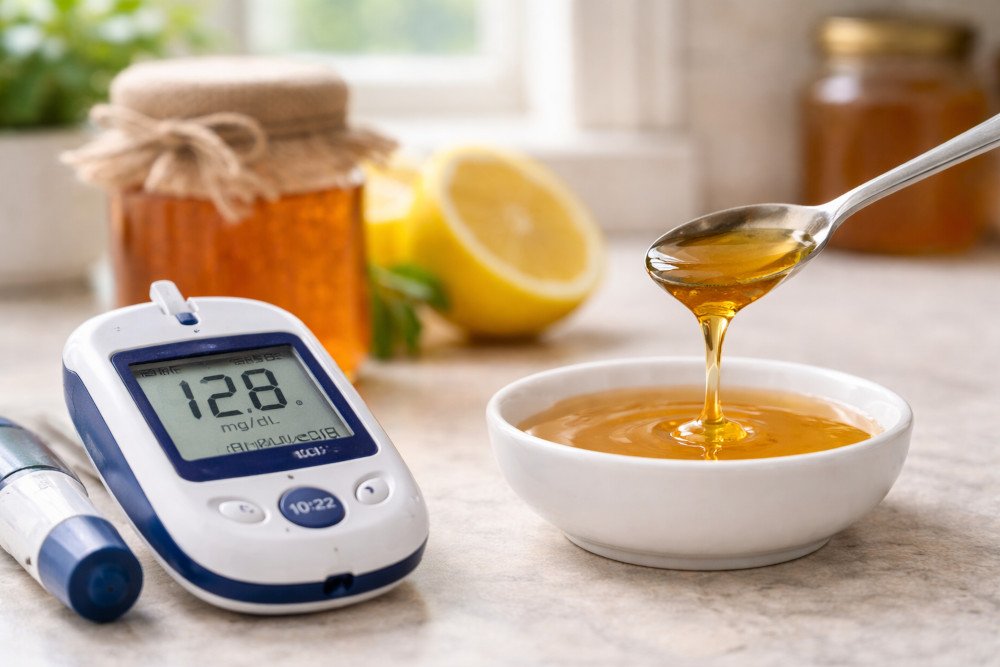
Honey is often seen as a natural alternative to refined sugar, which leads many people with diabetes to ask whether it is a safer option. The short answer is that honey is still a form of sugar, but its effects on blood sugar can differ depending on type, quantity, and individual control.
This article explains how honey affects blood glucose, how it compares to other sweeteners, and when it may or may not fit into a diabetic diet. It is written as a consumer-focused guide within the Honey Essentials guide. It is NOT medical advice.
What Makes Honey Different From Regular Sugar?

Honey is primarily made up of carbohydrates in the form of sugars. The main sugars in honey are fructose and glucose, with small amounts of other sugars, enzymes, minerals, and organic acids.
Table sugar, by contrast, is sucrose, which is a combination of glucose and fructose in equal parts. While both honey and sugar raise blood glucose, the way they do so can differ slightly due to their composition.
Honey usually contains:
- About 35–40% fructose
- About 30–35% glucose
- Small amounts of water, enzymes, and trace minerals
Because fructose is absorbed differently from glucose, honey can sometimes cause a slower rise in blood sugar than pure glucose or refined sugar.
How Honey Affects Blood Sugar Levels
When honey is eaten, the glucose portion enters the bloodstream quickly and raises blood sugar. The fructose portion is processed mainly by the liver and has a slower effect on blood glucose.
For people with diabetes, this means honey can still cause blood sugar spikes, especially if eaten in large amounts. The rise may be slower than white sugar in some cases, but it is not neutral or harmless.
The actual effect depends on:
- Portion size
- Type of honey
- Whether it is eaten alone or with other foods
- Individual insulin sensitivity and diabetes management
Honey should therefore be treated as a carbohydrate source, not as a free or “safe” sweetener.
Glycaemic Index of Honey Explained
The glycaemic index (GI) measures how quickly a food raises blood sugar compared to pure glucose. Foods with a lower GI generally cause slower blood sugar rises.
Honey has a moderate glycaemic index, usually ranging from 45 to 65, depending on the variety. This is lower than white sugar, which has a GI of about 65, but higher than many whole foods.
Factors that influence honey’s GI include:
- Floral source
- Fructose-to-glucose ratio
- Processing level
Some darker honeys and raw honeys may have a slightly lower GI, but the difference is not large enough to remove the need for portion control.
Raw Honey vs Processed Honey for Diabetics
Raw honey is honey that has not been heated or heavily filtered. It retains more natural enzymes, pollen, and trace compounds than processed honey.
From a blood sugar perspective, raw honey and processed honey are still very similar. Raw honey is not sugar-free and does not prevent glucose spikes. However, raw honey may offer small nutritional benefits that refined sugar does not.
For diabetics:
- Raw honey may be preferable in very small amounts
- Processed honey offers no blood sugar advantage
- Neither should be consumed freely
Choosing raw honey is more about overall quality than blood glucose safety.
Can Honey Be Used Instead of Sugar for Diabetics?
Honey can sometimes replace sugar in small quantities, but it should not be viewed as a solution for managing diabetes. Replacing sugar with honey does not remove the need to monitor carbohydrates.
Because honey is sweeter than sugar, some people use less of it, which can slightly reduce total sugar intake. This benefit depends entirely on portion size and discipline.
Honey may be considered:
- Occasionally, not daily
- In measured amounts
- As part of a meal, not on its own
It should never be added on top of an already high-carbohydrate diet.
How Much Honey Is Safe for Someone With Diabetes?
There is no universal safe amount of honey for diabetics. Tolerance varies between individuals and depends on medication, activity level, and blood sugar control.
As a general guideline:
- Honey should be limited to very small portions, such as half a teaspoon
- Blood glucose should be monitored after consumption
- Honey should be counted as part of daily carbohydrate intake
People with poorly controlled diabetes should avoid honey altogether unless advised otherwise by a healthcare professional.
When Honey May Be Especially Risky
Honey may be inappropriate or risky in certain situations. This includes times when blood sugar control is unstable or when insulin dosing is still being adjusted.
Honey should be avoided:
- During high blood glucose episodes
- On an empty stomach
- In large quantities or frequent doses
People using insulin or sulfonylureas should be particularly cautious, as honey can contribute to unexpected glucose spikes.
Are There Any Situations Where Honey May Help?
In limited cases, honey may be used to treat mild hypoglycaemia under medical guidance. Because honey raises blood sugar, small amounts can help correct low glucose levels.
This use is functional, not dietary, and should only be done as part of a diabetes management plan. Honey should not be relied on casually for this purpose without clear instruction.
Honey Compared to Other Sweeteners
Compared to refined sugar, honey offers slightly more nutritional value but similar blood sugar effects. Compared to artificial sweeteners, honey raises blood sugar significantly more.
For diabetics, non-nutritive sweeteners generally have less impact on glucose levels. Honey may be chosen for taste or natural preference, but not for blood sugar control.
The choice comes down to:
- Taste preference
- Portion control ability
- Overall dietary pattern
Honey should never be assumed to be safer simply because it is natural.
Key Takeaways for Diabetics
Honey is not forbidden for all people with diabetes, but it is not harmless. It is still a sugar and must be treated as such.
For most diabetics:
- Honey should be occasional, not regular
- Portions must be small and measured
- Blood glucose monitoring is essential
Anyone considering adding honey to their diet should discuss it with a healthcare provider or dietitian, especially if blood sugar control is challenging.