

Why Bees Cannot Be Sociopaths
Bees are often compared to humans because of their complex societies, teamwork, and communication. But when we use human terms like “sociopath” to describe animal or insect behaviour, it can create confusion.
Sociopathy is a human psychological condition, and bees cannot be sociopaths. Here’s why.
What Is Sociopathy?
The terms sociopathy and sociopath receive a lot of attention in present-day world politics, among other human areas of interest
In human psychology, sociopathy refers to a pattern of behaviour where a person consistently:
- Disregards social norms and rules
- Lacks empathy for others
- Manipulates or exploits people
- Acts impulsively or aggressively
This condition, linked to Antisocial Personality Disorder, depends on human morality and cultural norms.
Why Bees Cannot Be Sociopaths
1. Bees Lack Human Morality
Sociopathy is defined by violating moral and legal rules. Bees do not operate under morality or law.
Their behaviour is driven by:
- Evolution
- Genetics
- Instinct
- Environmental pressures
A bee that stings, defends, or competes is not breaking rules. It is following survival patterns.
2. Bee Societies Depend on Cooperation
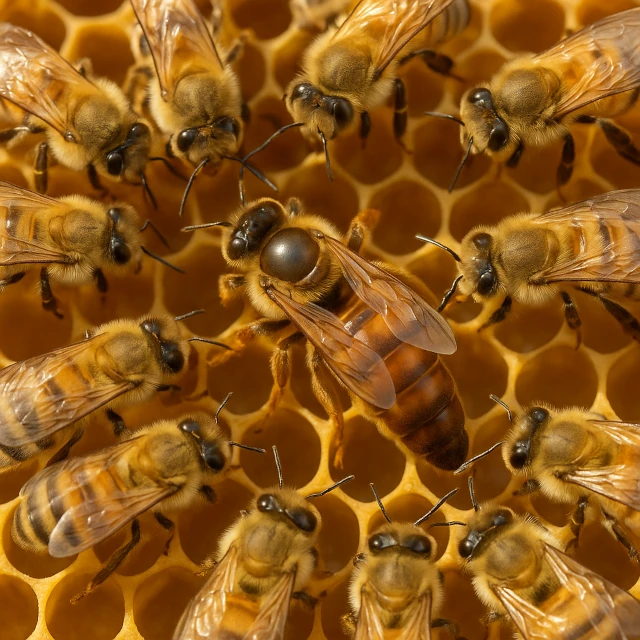
Bee colonies are examples of superorganisms, where every bee contributes to the survival of the hive.
- Worker bees gather nectar and pollen.
- Nurse bees care for larvae.
- Drones fertilise the queen.
- The queen ensures reproduction.
If bees acted in ways similar to sociopaths — ignoring roles, exploiting others, or destroying cooperation — the colony would collapse. Natural selection has eliminated such traits.
3. “Antisocial” Bee Behaviours Are Adaptive
Some bee behaviours might look antisocial if judged by human standards:
- Queen rivalry: New queens sometimes fight until only one survives.
- Drone expulsion: Worker bees force drones out before winter.
- Robbing: Bees steal honey from weaker hives.
But these actions are not sociopathy. They are evolutionary strategies that ensure hive survival. Bees do not act out of malice, manipulation, or disregard for “rules” — they act out of necessity.
4. Insect Brains vs. Human Brains
Sociopathy in humans is linked to the prefrontal cortex and amygdala, which manage empathy, impulse control, and morality.
Bees have a much simpler nervous system with no capacity for guilt, empathy, or moral reasoning. They cannot choose to be “good” or “bad.”
The Real Lesson From Bees
Bees remind us that cooperation is stronger than individualism. Every bee has a role that supports the hive. Unlike humans, where sociopaths exploit others, bees survive only by contributing to the collective.
For people interested in human psychology, sociopathy shows how individuals can harm groups. For those interested in bees, the lesson is the opposite: insects thrive because their social instincts prevent antisocial behaviour.
Conclusion
Bees cannot be sociopaths because sociopathy requires human-style morality and social norms. Bee behaviour that looks ruthless is actually adaptive and necessary for the colony’s survival. Where sociopathy destroys human communities, cooperation secures the future of bee colonies.
🐝 Myth vs Fact: Bees and Sociopathy
Myth: Bees can be sociopaths because some behaviours look ruthless (e.g., robbing, queen fights).
Fact: Sociopathy is a human psychological condition tied to morality, empathy, and social rules. Bees act on instinct and evolutionary survival strategies.
Myth: A bee that kills or expels another bee is acting like a sociopath.
Fact: These behaviours ensure the hive’s survival — for example, queen rivalry determines leadership, and drone expulsion preserves food for winter.
Myth: Bees choose to be “selfish” or “antisocial.”
Fact: Bees cannot make moral choices. Their nervous systems are too simple for concepts like guilt, manipulation, or morality.
Myth: Antisocial behaviour exists in bee colonies.
Fact: Bee societies thrive only through cooperation. The hive functions as a superorganism, where every bee has a role that benefits the colony.